
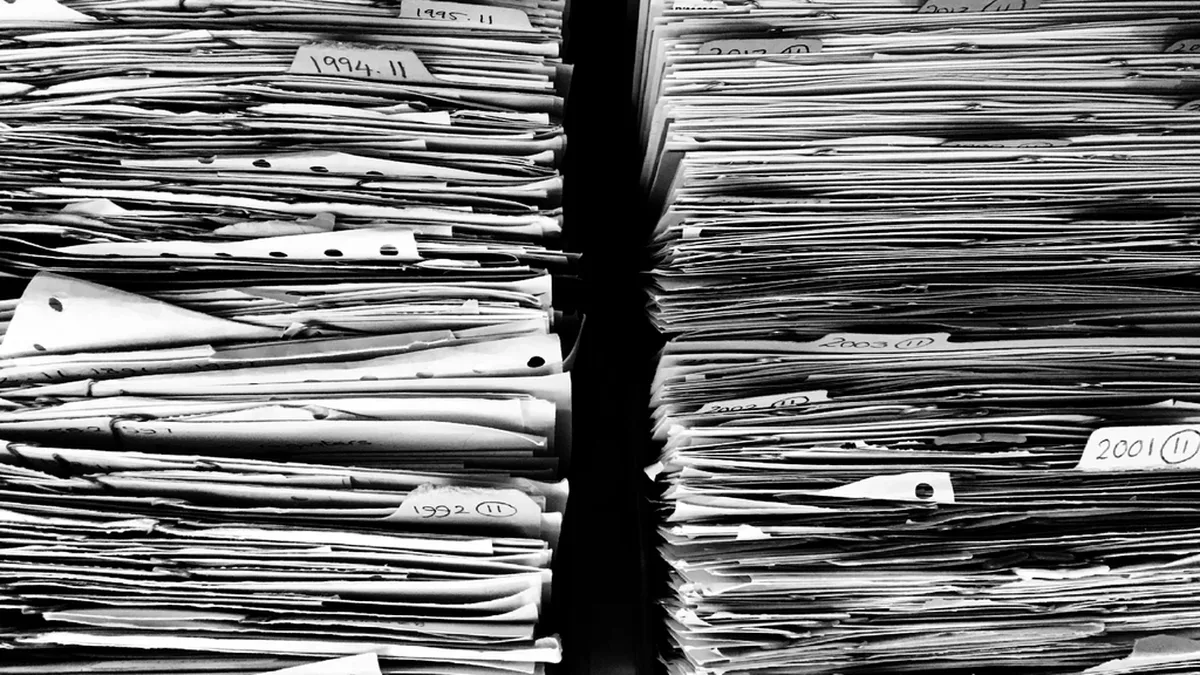
Paper seems free. A sheet, a pen, a binder. Yet when you add up everything that happens around a paper form, the bill climbs fast.
Time paid for twice
An employee fills in a form in the field. Then someone at the office retypes it into Excel or another program. The same work is paid for twice, and the second time adds no value.
Transcription errors
Illegible handwriting, a missed box, two digits swapped. Every retyping is a chance for error. And an error found too late can cost you a disputed invoice, a wrongly ordered part or a compliance problem.
Lost documents
A report left in a truck, a stained sheet, a binder nowhere to be found during an audit. Paper has no backup.
Information that arrives too late
With paper, managers see the data at the end of the day or the week. A problem reported in the morning only gets dealt with the next day.
Direct costs
Printing, photocopies, binders, storage space, secure shredding of confidential documents. Taken one by one, these are small expenses. Added up over a year, they become significant.
How to calculate your own cost
Take one form. Estimate the time to fill it in, the time to retype it, the number of forms per month and the average hourly rate. Multiply. The result often surprises business owners, and it's rarely the paper itself that costs the most: it's the time around it.